Monday, February 28, 2022

No Place Like Home

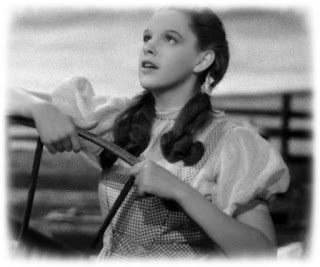
Judy Garland, The Wizard of Oz (1939)
There's no place like home, so declared Judy Garland as Dorothy Gale in the 1939 film, The Wizard of Oz. She clicked her ruby red heels and hoped to return to the Kansas farm of Auntie Em and Uncle Henry.

Homesickness is an emotion shared by many,  young and old. While the American spirit has always encouraged travel and exploration. We usually are happy to return home — at least for a while.

And, so it was with Grenville and myself, maybe even more as my name is also Dorothy. However, I have never owned a pair of ruby red shoes.

After nearly 3 weeks on the road traveling from NH to FL and places in between, we were ready and happy to return home to Nashua. To be sure we had a great time and, thankfully, no bad weather, aside from rainy days which prohibited outdoor adventures. Yes, we are fair weather explorers, who do not enjoy walking around in inclement weather. While there were some indoor venues we could have visited, as luck would not have it, a couple were closed on the particular days we were there.

But as posted about earlier, the main focus of this trip, aside from Grenville's ham radio convention in Orlando, FL, was to also visit friends and family in NJ, FL, AL, and GA some of whom we had not seen in several years. It was great to see everyone again; hopefully, the next time will be sooner.
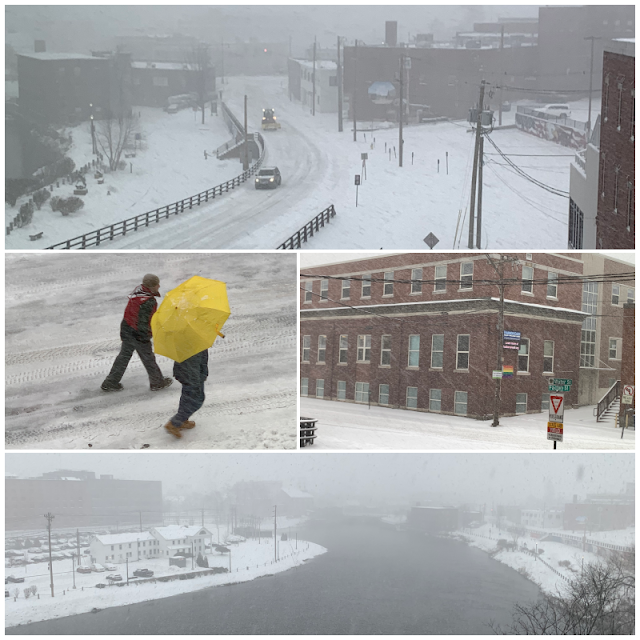
February 25 snowstorm in Nashua, NH
We arrived home last Wednesday afternoon and had timed our arrival to be ahead of a predicted snowstorm on Friday which arrived early morning as forecast. Before moving out late Friday afternoon, there was a fresh 8-inch snowfall left behind. We had the day before to get out and do some needed grocery shopping.
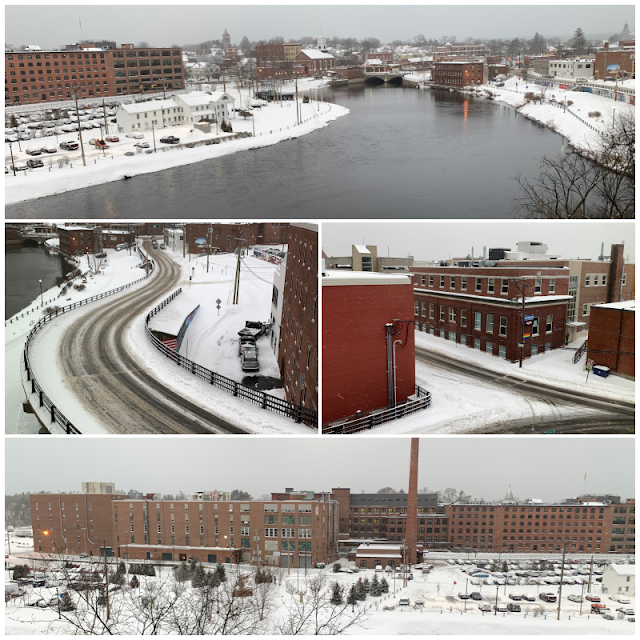
Clearing after the snowstorm
This snowfall was a light and "fluffy" one and by early the next morning, main roadways had been plowed and by late afternoon were nearly down to blacktop. 
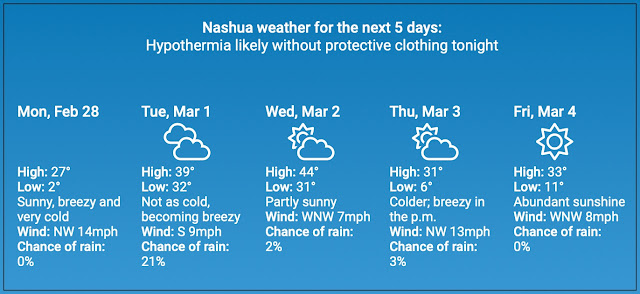
Forecast for Nashua, NH, this week
Today's forecast indicates that it will be the coldest one for the next few days, and later in the week a lot of daytime snow melting will happen in the city.

Anyone who has been away from home, knows there are a myriad of tasks to catch up on, which for apt dwellers such as ourselves, are lessened somewhat. Besides shopping, there's always the laundry and housekeeping chores.

In addition, I spent several hours this weekend catching up on some of your recent blog posts. Because of time constraints, I did not comment on all of your earlier posts; but did endeavor to comment on the most recent posts. Most days, many  of my fellow bloggers are more prolific than myself in posting. I enjoy your images, views and photos, thank you.

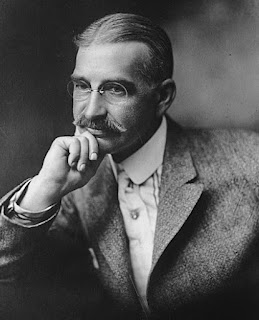
L. Frank Baum, circa 1911
As many know, in The Wizard of Oz, Dorothy killed the Wicked Witch of the East by tossing water on her while attempting to douse fire the
wicked witch induced on her Scarecrow friend. Glinda, the Good Witch of the North, instructed her to click her heels and think, There's no place like home. Dorothy says it aloud several times before waking up in her bedroom, just like she had never left.

Did you know that Lyman Frank Baum, the author of The Wonderful Wizard of Ozdid not name any of the witches in his series of 14 Oz books? (neither did I). In the novel, Dorothy simply throws water on the WW in a fit of anger.

There won't be many posts detailing our recent road trip. I still have catch-up posts about several of our 2021 New England explorations.

Before then, a future post will detail our visit to a GA town which has trademarked itself as The Hollywood of the South. 

Thanks to everyone for the reactive comments to last week's Friday Funnies. It was fun reading them. And, now, some may also be looking at commonplace items in a different (funny) way.

Friday, February 25, 2022

Friday Funnies

 Oh No or an unhappy trio?


Humor can be found in so many unexpected places and things as well. As always, please free to add your own suggestions in the comments.

Enjoy Your Weekend, Everyone
We enjoyed our travels and were home before today's 🌨

Monday, February 21, 2022

Where We've Been

It's been awhile (three weeks or so) since my last post right before we left home in Nashua, NH. (Thanks, everyone for the birthday well wishes). 

In the interim, we've visited six states (NJ, VA, SC, FL, AL, GA) with a couple more to come before we're back home. Unfortunately, there has been little sightseeing in most places. A couple of states were overnight stays; in others it rained nearly all the time (1-3) days we visited.
Fernandina Beach, FL
Anyone who has traveled knows that bad weather can dampen extended sightseeing. We try to explore as much as possible on road trips and often this requires outdoors time, definitely not enjoyable during downpours. Thankfully, there hasn't been any snow or ice but temps in FL, AL and GA were cooler than anticipated. The morning we left NH, the temperature was in the single digits. Daytime FL temps in the 40s and 50s were like springtime to us, but less so for residents.

The incentive for this road trip (aside from my birthday and Hearts Day) was Grenville's ham radio convention in Orlando, FL, which he called disappointing in that several major product vendors were no-shows. This event had been cancelled in 2021, apparently event attendance is not back to pre-pandemic levels of the 2020 convention he attended there.

We had anticipated the possibility of meeting fellow bloggers in FL and TN on this trip. However, after exchanging emails and phone conversations, we mutually agreed that this was not the best time because of you-know-what. We always enjoy meeting people, but would rather everyone be safe and feel comfortable. And, just maybe, we will have the chance to meet up on a future trip. 

Social distancing was recommended in most of our accommodations, which have all been Hampton Inns with the exception of the Orlando convention hotel. The least said about that one the better as it was like an oversized motel that featured outside facing rooms on six levels. Mask wearing was not required in, aside from when using trolleys in Alexandria, VA and Orlando, FL, where masks were required regardless of vaccination status. One hotel required guests to don plastic gloves at the in-house breakfast and had an employee positioned there to ensure compliance. While similar gloves were provided at a couple of other locations, their use was optional and I noticed that most guests opted not to wear them, myself included.

Weather and lack of sightseeing aside, the best thing about the trip was visiting family and friends who we saw three years ago when Grenville attended a convention in Dayton, OH.

Grenville has cousins in FL and AL and a Navy buddy in FL. I have a cousin and former co-worker in GA. We also visited my brother and his wife in NJ where we co-celebrated their January wedding anniversary and my February birthday. 
Architecture in downtown Fernandina Beach, FL
After two days of rain, we spent a sunny afternoon in downtown Fernandina Beach which is the northernmost city on Florida's Atlantic coast and located on Amelia Island, known as the Isle of 8 Flags because it has had the flags of that many nations flown over it: France, Spain, Great Britain, Spain (again), the Republic of East Florida, the Republic of the Floridas, Mexico, the Confederate States of America, and the United States.

While the French, English, and Spanish all maintained a presence on Amelia Island at various times during the 16th, 17th, and 18th centuries, the Spanish established Fernandina named in honor of King Ferdinand VII of Spain.
Grenville posed with a couple of "new" but silent friends. The weather was warm and sunny on the last of our 3-day stay. The pirate on the left was standing guard outside the Palace Saloon, Florida's oldest bar; the one on the right was outside a gift store.
Fernandina Beach, FL, sunset
The day ended with a beach walk, and as shown by our outerwear, it was a chilly late afternoon. After leaving FL, our adventures continued, some highlights will be in future posts. 

This week we're headed home with a overnight stops for dining and sleeping only. There's a forecast of ❄️ snow by the end of the week and we plan to be home before then.

FYI — blog reading/commenting has been delayed during our travels; hopefully I will get to read your recent posts once we're back home in Nashua.

Thursday, February 3, 2022

It's My Birthday, Once Again

And not just celebrated for one day, but throughout the entire year. It's my long-standing belief that celebrants should party on that long as this particular day (unfortunately) will only come once in a lifetime.

I'm part of the Baby Boomer generation which covers the age range between 58-77 years from 1945 to 1964. The term comes from the explosion of babies born during the post WW II baby boom when the number born during this time period was about 50% higher than average. Baby Boomers are now reaching the age of retirement which both Grenville, also a Baby Boomer, and myself have been enjoying for 20+ years.

I was born on a Thursday a.m. in 
II•III•MCMXLIX or 73 years ago in Arabic numerals! It wasn't a leap year, that was the year before (1948). My astrological sign is Aquarius, the water bearer; nice that there was a song about it too; The Age of Aquarius by The 5th Dimension remains a favorite. My Chinese zodiac sign is the Ox. My birthstone is the amethyst, and lucky for me as purple is my favorite color.

These events happened on my birthdate in various years

1864 - Maj. Gen. William Sherman begins the Meridian campaign through Mississippi
1869 - Booth theater opens in NYC at 23rd & 6th (Romeo & Juliet)
1918 - Twin Peaks Tunnel light rail/streetcar tunnel begins service in San Francisco, CA
1945 - Walt Disney releases The Three Caballeros
1945 - Yalta Conference agreed that Russia would enter WWII against Japan
1964 - Meet the Beatles LP goes Gold
1966 - Soviet Luna 9 is the first spacecraft to soft-land on the moon
1984 - Challenger 4,10th Space Shuttle Mission 4 is launched

While there were notable occurrences(and fun ones) worldwide in my birth year, none happened on my actual birthdate, but here's some major 1949 events:

Some Major Events
  • Communist forces gain power in China; nationalists flee to Taiwan
  • North Atlantic Treaty Organization (NATO) established
  • Soviet Union detonates its first atomic bomb
  • Israel admitted to United Nations
  • Soviet Union lifts 11-month blockade against West Berlin
  • West Germany and East Germany formally established as nations
Business & Economy
Nearly 500,000 steel workers went on strike in 29 states shutting down 95 percent of the nation's steel mills. The issue was whether workers should contribute to a pension plan recommended by a Presidential fact-finding board. The strike coincided with a coal miners strike that year.

Science & Technology
U.S. Air Force’s Lucky Lady II, a Boeing B-50 Superfortress, became the first airplane to circle the world non-stop. Its 1949 journey, assisted by in-flight refueling, lasted 94 hours and 1 minute. 

Sports
In the World Series, the New York Yankees beat the Brooklyn Dodgers winning in five games for their second defeat of the Dodgers in three years

Arts & Entertainment
Here's what was happening in the movies, TV, on the radio, in books, and more:
  • Movies: The Third Man, All the King’s Men
  • Songs: So In Love, Riders in the Sky, Diamonds are a Girl’s Best Friend, Rudolph the Red-Nosed Reindeer, Some Enchanted Evening
  • TV Shows: Texaco Star Theatre, Candid Camera, Colgate Theatre, Kukla Fran & Ollie
  • Books: The Man with the Golden Arm, Nelson Algren; The Jacaranda Tree, H.E. Bates; Guard of Honor, James Gould Cozzens; Love in a Cold Climate, Nancy Mitford; 1984, George Orwell; This I Remember, Eleanor Roosevelt
  • Rodgers and Hammerstein's production of South Pacific opened on Broadway
  • Death of a Salesman, a play by Arthur Miller won the Pulitzer Prize for drama
Everyday Life
  • Grocery stores: a loaf of bread cost 13 cents on average. Milk was 84 cents a gallon. A pound of bacon was 50 cents. A 13 ounce box of Kellogg’s Corn Flakes was 19 cents. A 10-1/2 ounce can of Campbell's Soup was 10 cents.
  • Average annual salary $2,950 to $3,600; minimum wage 40 cents per hour.
  • There were about 44,000 TVs in American households, compared to 44,000 in 1947, and that number swelled to 940,000 in 1949 and 20 million in 1953.
  • The fad of pyramid clubs began in California. The concept was that a dollar would get you in the door and 12 days later you were over $2,000 richer. The promise of easy money made these clubs hard to resist and they quickly spread across the U.S. and into Canada. Only a handful of people would make any profits from the fad; most will be organizers of their own pyramids. 
Popular 1949 Baby Names
Mary, Patricia, Barbara, Susan, Sandra, Linda, Carol, Kathleen, Margaret, Judith, Chirley
James, Robert, John William, Michael, Richard, David, Charles, Thomas, Donald, Joseph

Celebrated 1949 Birthday Babies
John Belushi, Jeff Bridges, Simon Callow, Keith Carradine, Patrick Duffy, Julian Fellowes, Victor Garber, Richard Gere, Billy Joel, Don Johnson, Lawrence Kasdan, Andy Kaufman, Jessica Lange, Nancy Meyers, Bill Nighy, Michael Richards, Sissy Spacek, Meryl Streep, Zoe Wanamaker, Sigourney Weaver

Couple of Fun Facts
Silly Putty® was introduced in a 1949 toy catalog and priced at $2, it outsold everything else. It was originally called Nutty Putty, and invented in 1943 by James Wright, an engineer working in a General Electric laboratory in New Haven, CT. When a rubber shortage threatened war production during WW II, the government had asked U.S. companies to invent a synthetic rubber with similar properties, but made with non-restricted ingredients. Wright found that combining boric acid and silicone oil produced a putty that could bounce when dropped, stretch farther then rubber, and had a high melting temperature, while amazing, it didn't contain properties needed to replace rubber. Unable to come up with an idea on how to use the putty, Wright sent samples to other scientists, but none found a use for it until Peter Hodgson, an advertising consultant, persuaded a toy seller to advertise it in a toy catalog. He later changed its name. Sales poured in after a 1950 article in The New Yorker magazine. It was considered a novelty toy for adults, before becoming a hit with children.

Gussie Moran
U.S. tennis player Gussie Moran, ranked No. 4, and playing at Wimbledon wore an outfit that featured a short skirt revealing, at certain angles, lace-trimmed panties. It was created by Cuthbert Tinling, a tennis player, fashion designer and sports writer. The outfit, a first at Wimbledon, caused photographers to lay down to capture the “racy” and “naughty” outfit. Moran was called Gorgeous Gussie in newspaper reports which reported the fringed panties were in evidence when Gussie races across the court or leaps for a high shot. The Committee of the All England Lawn Tennis and Croquet Club accused Moran of bringing “vulgarity and sin into tennis.” Tinling, who had served as an official Wimbledon host for 20 years, was asked to “take leave” of his position by the outraged tennis establishment. He wasn't invited back for 33 years. 
Thanks for reading this birthday post and also
for your well wishes, always MUCH appreciated.

We're on a road trip and Grenville told me it was for my birthday and Hearts Day. He said it was mere coincidence that there's a ham radio convention in Orlando, FL in between the two dates.

Monday, January 31, 2022

Snow? We Got It

But, not as much as many other areas here in New England and in other northeastern U.S. states received on Saturday from a major nor'easter, which has dubbed Winter Storm Kenan.
by the Weather Channel which is naming winter storms for the 10th season. 

Snowfall total here in Nashua, NH, was just shy of 9 inches with an official amount of 8.8 inches. Totals differed in some areas because of light drifting snow.
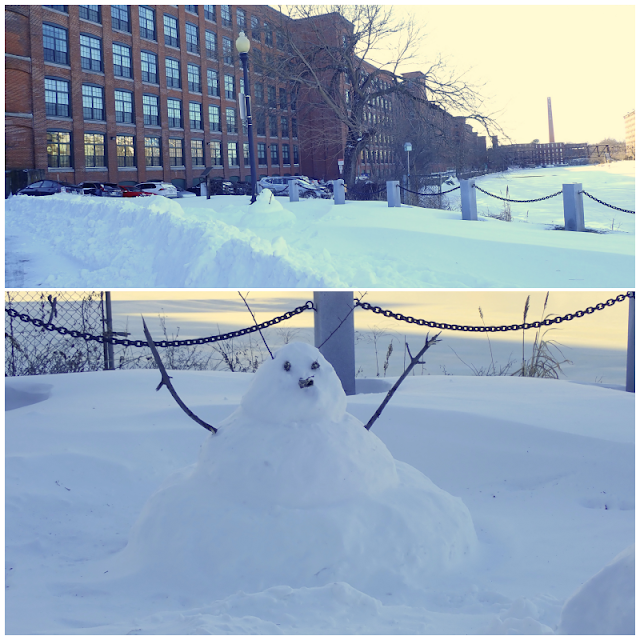
Morning after the first major winter storm of 2022 
And, as usual, this day after view was taken Sunday morning from the warmth and comfort of our 5th floor mill apartment overlooking the Nashua River. The sun was shining brightly but the temps were frigid outdoors in the single digits.
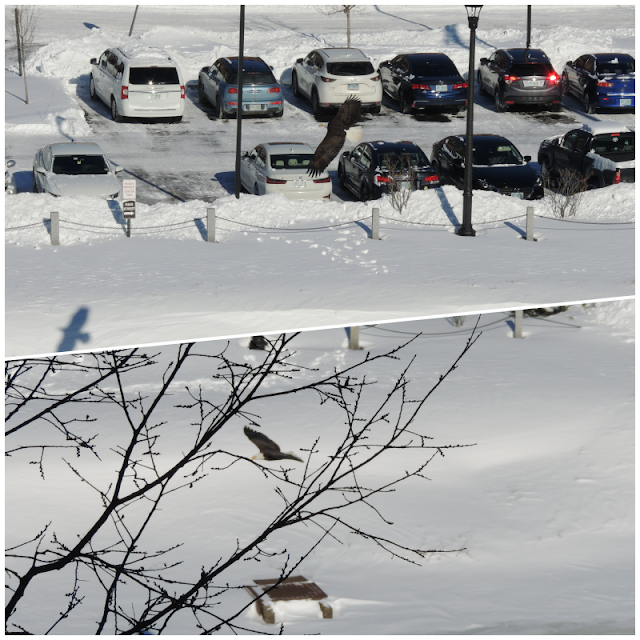
Here's a view that was not usual and very unexpected as this bald eagle made several passes over the river perhaps looking for a morning meal. Grenville managed to capture these quick images before it left without finding any gulls or ducks around. It's times like this that a zoom lens would have come in handy (sigh).
It's history now, but this major winter storm packed blizzard conditions with high winds that dumped up to two feet of snow in some New England states, more in others. Up to 24 inches of snow piled up in areas of Massachusetts, Rhode Island, and Connecticut. Parts of coastal Maine got more than a foot of snow before the storm moved out late Saturday
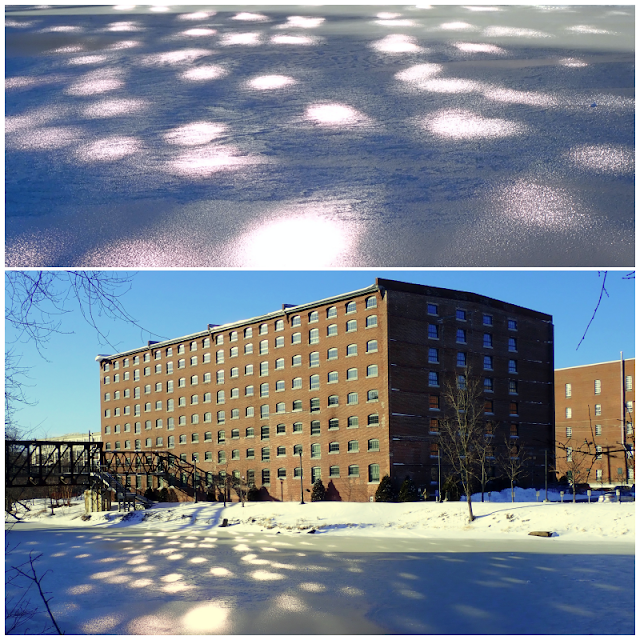
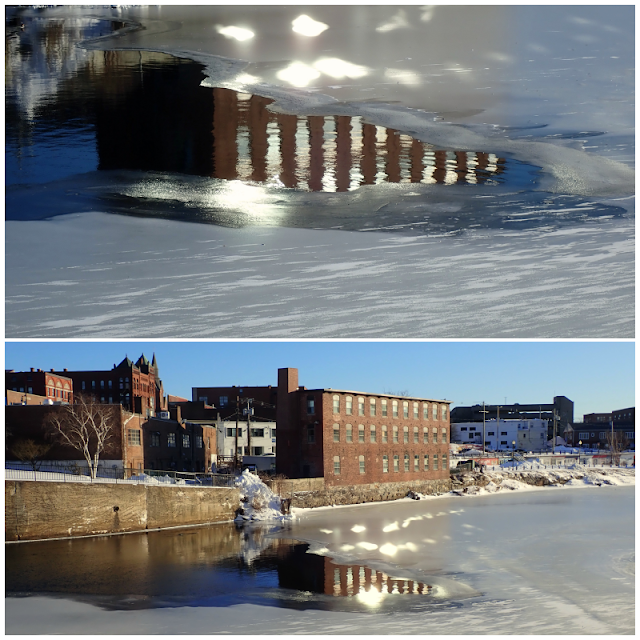
By the time we ventured out for a walk on Sunday when it had warmed up to near degrees, the late afternoon sun created some interesting patterns on the river.

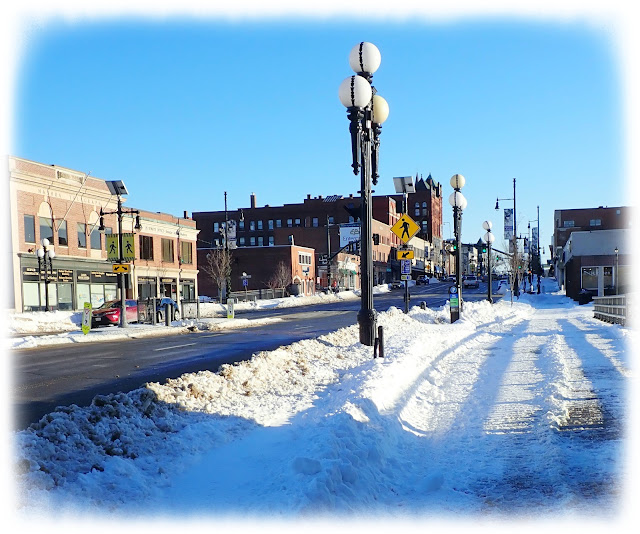
In the downtown area, Main Street was down to pavement and the sidewalks had been cleared for which we were grateful.
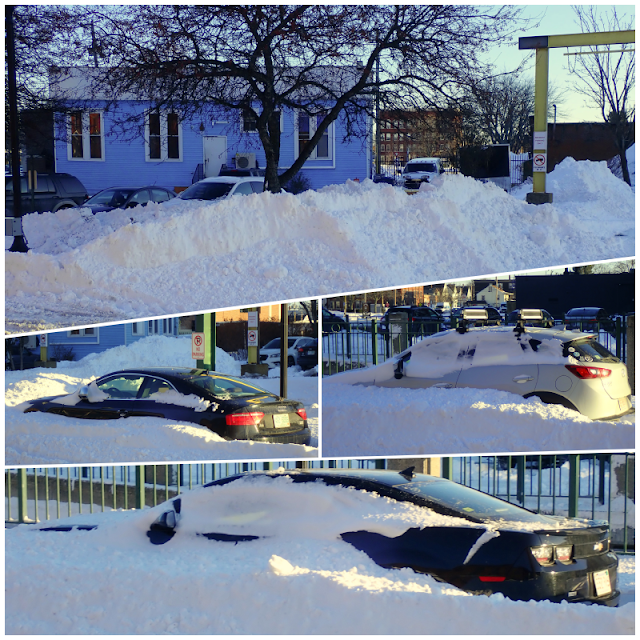
However, here in the mill apartment parking lot, the cars of some residents were snow-covered and plowed in. These owners need to be up early Monday morning as snow clearing starts at 7:30 a.m. and towing starts at 8 a.m. for unmoved cars. 

We're thankful for underground garage parking. It's well worth the cost to stay indoors without the need to shovel out. We did that for many years and it's wonderful not to do it now.

If where you live was blanketed by this storm, we hope you were safe and warm as well.

Friday, January 28, 2022

Friday Funnies

Cheap digs?

This listing was seen in the storefront window of a NH realtor. The hand done boxed highlighting didn't do anything to improve the presentation and make the listing look amateurish. 

Of course, this property isn't really going for under $2 especially with a private showing. It will take many more $ than that as anyone in the area would know there's an "M" missing. Yet, it does seems that the realtor assumed everyone will know that. And, you know what's said about assumptions.

Enjoy Your Weekend, Everyone
Forecast in NH is for a possible snowstorm

Thursday, January 27, 2022

So, Now I Know

Admittedly, there are many things I/we learn daily, some are useful, others interesting and then there are those that fall come under, who knew?  Here's a few of those latter ones that intrigued me and maybe you as well since, after all, sharing is caring.

Did you know that . . .
Credit: online sources

Earlier this month, no less than the U.S. federal government has decided that French dressing no longer needs to be regulated. (I did not make this up, honest.)

For more than 70 years, French dressing was the only pourable dressing that had to adhere to standards that require the dressing contain oil, seasoning and acidifying ingredients. And, in case you're wondering, other foods, like bread, jam and juices, also have standards of identity.

This popular orange dressing has had the same ingredients since 1950 when it was regulated under the standard of identity. Ironically, while consumers expect a reddish-orange color and tomato or tomato-derived elements in this dressing, none of these were required under the former standards to identify the dressing as "French."

According to a statement by the U.S. Food and Drug Administration (FDA) When the standard of identity was established in 1950, French dressing was one of three types of dressings we identified, the Food and Drug Administration said in the final rule posted in the Federal Register. The other two were mayonnaise and just salad dressing.

The Federal Register is the official journal of the federal government of the United States that contains government agency rules, proposed rules, and public notices. The Federal Register was created in 1935 by the Federal Register Act to centralize and standardize the public release of information about federal government affairs. It was founded in July 1935.

The FDA's rule on revoking standards for French dressing is a win for the Association for Dressing and Sauces, an industry group that's been around since 1926. The group has been petitioning for the standards set by the FDA to be pulled since 1998, citing an increase in the varieties of salad dressings on the market. The association said that French dressing is "marginalized" among other dressing offerings.

Now, French dressing will no longer need specific ingredients included to be labelled as such and manufacturers can be more creative with ingredients and flavors. Hopefully, not too creative as French dressing is one of my favorites.

The final rule, which will take effect February 14, but according to the FDA won't require manufacturers to change their ingredients or  practices which will surely please many.

Credit: online source
Did you know that . . .

Some fonts use are ink hogs when printing which means you might need to replace ink cartridges sooner, and some of them can be quite costly, especially now.

Surprisingly, a couple of the worst ink offenders are the most popular, Arial and Helvetica (the font used here). Both are clean, easy to read, and often default fonts, they've been shown to possibly use as much as 20% more ink than similar fonts. Not surprisingly, bold and fancy fonts also use more ink and very big fonts, like Impact, use even more ink.

What to do? When it comes to using a font that can save ink, size matters. The smaller the surface area of the font, the less ink it uses to print. A default font like Times New Roman, is economical as it has thinner letters. Fonts described as thin, condensed or narrow, can mean that the font will need less ink to print.

Some ink-saving fonts have been identified as: Times New Roman, Baskerville Old Face, Courier New, Century Gothic and Calibri. Terms like “thin” or “narrow” are also give-aways that a font can use less ink. 

Another tip is to use sans serif fonts (ones without flourishes). This isn't a hard and fast rule as Times New Roman is a serif font, but considered better than most fonts, sans serif fonts or not. (Of course, readability studies have found that serif typefaces are easier to read since added strokes make each character more distinctive which are easier for the eye to recognize.)

Saving ink when printing isn't the only savings. If a font needs more ink, printing takes longer using more electricity which equals more cost. Running out of ink means replacing those cartridges more often. Discarded containers can create plastic and metal waste (as fellow blogger David G. would agree). 

Thankfully, this blog doesn't have an ink issue using Helvetica font as it will not be printed out.

If oatmeal bubbles over when cooking on the stovetop/microwave, do you know why?

Credit: online source
As oatmeal cooks and the water boils bubbles appear. At the same time, starches in the cereal swell and form a gel which thickens making it difficult for the bubbles to escape. So many bubbles form that oatmeal rises and eventually spills over.

Suggested online remedies included: cooking the oatmeal at a lower power and cooking longer. (This was stated to work for some, but power can vary on some appliances; someone in a hurry doesn't want to add more time. Other suggestions were to add a fat (like butter), lay chopsticks across the pan or bowl, add fruit or nuts — none really worked well. In the end, a few sources recommended stirring more often or a larger pot/bowl to give the oatmeal more room to expand. Stirring the oats distributes the heat and disturbs the bubble. Great if there's time, but you wouldn't use the microwave if not in a rush.

Here's what works for me almost always: following package directions and adding a bit of salt. It just seems to work.

Now, comes the last thing which I've experienced too often and maybe you have as well. (It's OK to admit it here among friends.)

Did you ever enter a room through a doorway and forget why?

Forgetting why you've entered a room is known as the “Doorway Effect” and it happens to everyone, not just those older. In reality, it occurs at any age, any time and on any day.

The Doorway Effect is a widely experienced phenomenon, wherein a person passing through a doorway may forget what he/she was doing or thinking about before entering another room. This is a known psychological event, where changing a location causes a person to forget about something he/she was going to do or retrieve, thinking about, or planning to do.

It's been called a symptom of brain overload. To discover why this happens, researchers conducted a series of experiments using virtual reality. Over 70 volunteers were asked to remember certain objects, like a cone or cross, as they moved through computed-generated 3D rooms. They were asked to walk down partitioned corridors, or watch other people doing the same routine while completing memory tasks. 

The studies showed that it's not necessarily entering new rooms or doorways that caused a memory loss, but a sudden and total change of scenery that forced their minds to process something entirely new. For example, researchers say that moving through different floors in a store may not cause a memory lapse, but moving from the department store to the parking garage can cause us to forget something important.

In 2011, a team of researchers at the University of Notre Dame in a paper titled, Walking through doorways causes forgetting, concluded that memory was worse after passing through a doorway than walking the same distance within a single room. It concluded that the Doorway Effect occurs when changing both physical and mental environments, moving to a different room and thinking about different things.

How can you prevent the doorway effect?
A couple of recommendations included: living in an open plan space as no doorways could mean no Doorway Effect. Try to concentrate and pay more attention when entering a different room and imagine making the trip from one place to another

The simplest (and maybe easiest) solution — forget it as it wasn't that important in the first place. And, sooner or later, we usually remember the reason the room was entered.

And, now you might also know some things new to you.

Friday, January 21, 2022

Iced Designs

Snow has not been a regular weather event here in Nashua, NH, in recent weeks, unlike other areas of the state, New England, other U.S. states and in neighboring Canada. We've received a scant 5 to 6 inches snowfall from a recent storm. An early morning snowfall this week produced an early morning wintry scene, but later turned to rain.
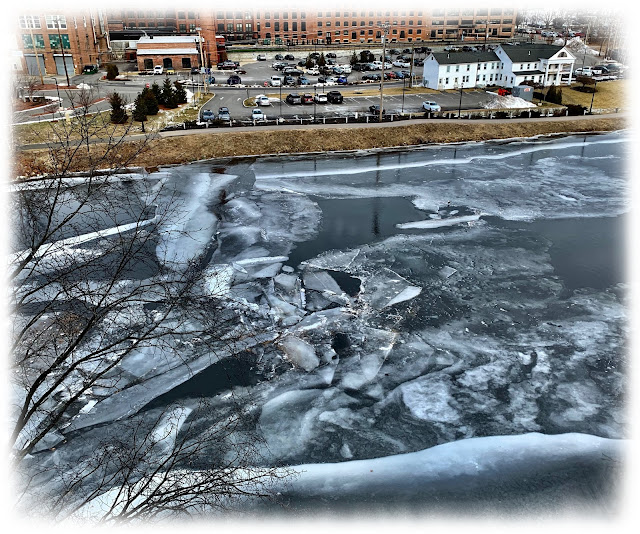
Despite the snowfall deficit, temperatures have hovered in the single digits for many overnights the past couple of weeks. It has caused ice to form on the Nashua River, but not to freeze it entirely solid for which the gulls and ducks have seemed thankful.
Some warming daytime temps this week started these ice break-ups while creating geometric shapes. These images were taken (as usual) from the comfort (and warmth) of our 5th floor apt. These images are straight out of camera (SOOC) with no post processing applied to them; including the blueish tint (brrrr).

Enjoy Your Weekend, Everyone
A snow-less one is forecast here

Wednesday, January 19, 2022

Traveling in Time

Time. We kill it, stop it, go back in it, escape it, rob it, lose it, walk through it, get robbed of it. It never seems to slow down or wait. At times, there's too much, sometimes not so much.

Perhaps, you're wondering why all this mention of time.

That's because it's time to go back in time to post about a visit to a PA museum in 2021. OK, pun time is almost never over.

For one reason of another, mostly forgetfulness, this last September road trip was  waylaid on my computer. This museum was one of the most interesting locations with lots of time (sorry) to explore. That's because on the day of our visit there were less than five others in the museum. 
The National Watch and Clock Museum (NWCM) in Columbia, PA ↑, specializes in horology, which is the study and measurement of time with devices including clocks, watches, sundials, hourglasses, timers, time recorders, marine chronometers, and atomic clocks. Those who study time are horologists. 

Described as the widest specialist horology museum in the country, the museum houses an extensive collection of historical clocks and watches from grandfather clocks to vintage clocks, mass-produced wristwatches and an atomic clock.

Founded in 1977 by the U.S. based National Association of Watch and Clock Collectors (NAWCC), the museum’s collection includes over 12,000 timepieces from around the world of which 3,000 are on display.
This Seth Thomas 4-dial street clock, circa 1920, (shown above) was originally erected in Greenville, SC. It was purchased by James Bell in 1967 and relocated to the Bell Photography Studio in Seneca, SC. In 1992, it was donated to the NAWCC Museum by the Bell family.

Unfortunately, the 10-minute introductory film which formerly welcomed visitors to the museum was no longer being shown as social distancing wasn't possible in the smallish room. Although our tour was self-guided, navigating through the museum was relatively easy. It's all on one floor with various rooms dedicated to specific timekeeping and timepieces. 
The lobby display featured American-made tall case clocks, also known as grandfather clocks, longcase clocks or floor clocks. These freestanding clocks are 6 to 8 feet tall with an enclosed pendulum and weights suspended by cables or chains which need occasional calibration to keep the proper time. 
One of the museum’s most popular collections is the large group of 18th and 19th century tall case clocks. Cases can feature elaborately carved ornamentation on the hood (bonnet), which surrounds and frames the clock face. Until the early 20th century, pendulum clocks provided the most accurate timekeeping. Tall case clocks were found in households and businesses. Today, they’re retained for decorative and antique value, replaced by analog and digital timekeeping.
Another large room is dedicated to the internal workings of tower clocks which centuries ago sounded bells that called people to work, prayer or for important functions. Early clocks didn't have dials, but were striking clocks located near a town center as the tallest structure so the bells could be heard over distances. Later, dials were added on the tower front to let people know the time whenever needed.
One very prominent tower clock maker was the E. Howard & Co. of Boston, MA, founded in 1857, which become a leading manufacture of weight driven clocks, including residential, commercial clocks and tower clocks. The company never made an inexpensive clock and everything made was of excellent quality. Today, Howard clocks are very collectible. The company name was used until 1861 when it became the Howard Clock & Watch Company which continued in business and produced about 854,000 watches through 1903.
Tower clock made by E. Howard & Co. is in Clocktower Place, Nashua, NH

Interior and exterior views of tower clock at Clocktower Place, Nashua, NH
We were very interested in the room of tower clock displays. Our mill residence, Clocktower Place, has a tower clock made by E. Howard & Co. Several years ago we were fortunate to see this still functioning timepiece thanks to a private tour from the residence manager.

The highlight of our visit was an introduction to the monumental clock. The term monumental clock applies to very large clocks placed on the face of a building or tower as focal points that can be seen from afar. These clocks are most often found on stadiums, waterfront properties, transit centers, and/or skyscrapers. 

That said, a monumental clock can also be an oversized freestanding, complicated, handcrafted clocks. Some two dozen of these were taken on tours around the U.S. and worldwide between 1875 and 1900. The clocks had animated panels, automated and mechanical music and often astronomical indicators. Monumental clocks of 19th-century America had classical and Christian symbolism with uniquely American characters and motifs. The clocks were popular not for time telling but entertainment. 
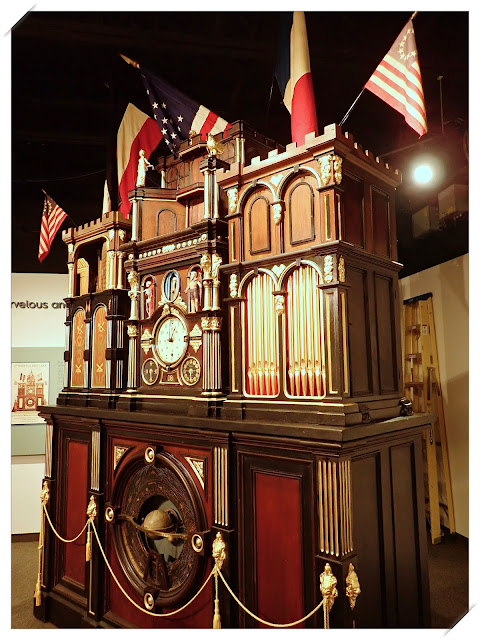
Engle Monumental Clock
The museum’s most impressive display is the first known American made monumental clock. Built by clock designer Stephen Decatur Engle of Hazleton, PA, the Engle Clock is monumental in size with dimensions of 11 feet high, 8 feet wide, 3 feet deep and weighing 1,049 pounds. Engle completed the clock in 1877 after 20 years of workmanship. It features time-telling, music,  and moving carved figures. But timing is everything and unfortunately this creation was finished several months too late for the 1876 Philadelphia Exposition.
The Engle clock indicates the day of the week, current month, and phase of the moon. It has three towers, two organ movements and 48 moving figures that include a unique cast of characters: Jesus Christ, the three Marys from the New Testament, the 12 apostles, Satan, Father Time, Death and a group of Continental soldiers who march past Molly Pitcher on their way to the Battle of Monmouth adds a distinctly American dimension.

This monumental clock toured the Eastern U.S. continuously for 70 years then disappeared after a 1951 showing at the Ohio State Fair. Museum members spent years searching before it was found in 1988 a barn in New York State. The clock's purchase and restoration by NAWCC members and volunteers was funded by donations from member chapters.

The museum includes demonstrations of the clock's mechanisms at two daily showings with a staff member advancing the time settings so visitors are not watching for a full hour. It's nothing short of amazing to see. To see the clock in action, you can check online as museum visitors have included videos on YouTube. The NWCM has one on Vimeo as well.

Here's a rundown of the action: On the hour, the skeletal figure of Death strikes a bone against a skull attached to the column of the clock. At 15, 30, and 45 minutes past the hour, Father Time strikes a bell with a scythe and turns his sandglass as the central figures of Youth, Middle Age, and Old Age revolve in the arch above the clock dial. At 40 minutes past the hour, a parade of Revolutionary soldiers and Molly Pitcher appear in the left tower and a barrel organ plays patriotic tunes. At 55 minutes past the hour, the three Marys come out of the center tower as a procession of apostles takes place accompanied by hymns from the barrel organ in the right tower. The soldier at the top of the central tower maintains a vigil while the clock is running.
Engle, who was more interested in invention than showmanship, turned over management of the clock to Philadelphia entrepreneur Captain Jacob Reid who promoted it as The Eighth Wonder of the World. Reid exhibited the clock throughout the Eastern U.S. charging 25 and 15 cents for adults and children.
The above image shows an advertising clock popular in the 19th century. These were made primarily of wood with spring-wound movements. Product or manufacturer information was painted directly on the dial, case or anywhere it could fit and be seen. The clocks featured three drums covered with advertisements connected to them, which would rotate every 5 minutes when the clock was running showing a total of 9 ads every 15 minutes.
Other companies advertised their products on the front of clocks.
Other museum rooms contain extensive displays of European clocks, German cuckoo clocks, vintage pocket watches and old and newer wristwatches. We looked at so many and keeping track of all afterwards is difficult. Each timepiece had some explanatory information.
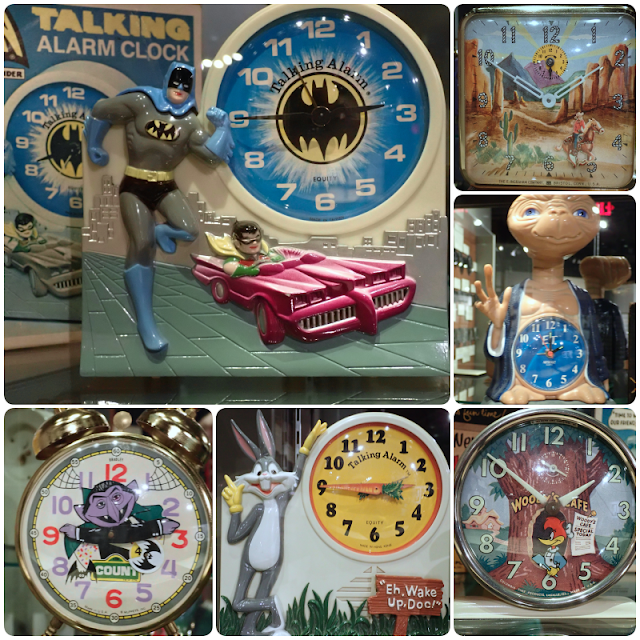
Here's a couple examples of display cases with vintage pocket watches and novelty character alarm clocks. I wonder how if any child enjoyed waking up to a talking Batman or Bugs Bunny? 
There's a prominent local connection to watchmaking in this part of the state. The museum includes an extensive collection of models, drawings, and time pieces from the Hamilton Watch Company formerly based in Lancaster, PA, and now a part of Swatch.
Hamilton was established in 1892 and many of its timepieces gained fame as The Watch of Railroad Accuracy. While many industries required careful time-keeping, railroad accuracy could be a matter of life and death. In the early days of American railroads, there wasn't a common method of timing so accidents were frequent. As railroads became more popular, tracks became crowded and trains started crashing into one another. If one train was running early and another running late, they could be running on the same track at the same time in opposite directions. The precision of Hamilton pocket watches was reported to have helped this issue. Hamilton's first railroad watch was the model 940, with 21 jewels and about 200,000 were made.
In 1918, as aviation developed, Hamilton watches were used to keep the new coast to coast U.S. Airmail service on time and became synonymous with the world of aviation. In the 1930s, Hamilton was the official watch of the four major American commercial airlines.

In WWI, as an official supplier to the U.S. Armed Forces, Hamilton equipped soldiers with timepieces prompting a shift in production from pocket watches to wristwatches. In 1942, Hamilton halted consumer watch production during WWII. The company produced over a million timepieces from wristwatches to marine chronometers and earned an Army-Navy E award for excellence in manufacturing. 

In 1957, Hamilton revolutionized the watch industry with Ventura, the world's first electrical battery operated watch. In 1972, Hamilton Watch marketed the Pulsar Time Computer, marketed as the world’s first digital watch, which was marketing promo as it only told time. It produced only 400 pieces with an 18-carat gold case at a cost $2,100, more than a new Ford Pinto sold for then. 

Hamilton was known as the Movie Brand for almost 90 years. Its watches have appeared in over 500 major feature films since 1932. The Hamilton Watch Company ceased operations in 1980.

Another U.S. watch manufacturer predominantly featured in the museum is the Waltham Watch Company, which was based in Waltham, MA, and pioneered the mass production of watches with interchangeable parts. 
The company produced over 40 million watches, clocks, speedometers, compasses, time delay fuses, and other precision instruments between 1850 and 1957. Now defunct, the former factory complex was added to the National Register of Historic Places in 1989.

All puns aside, our visit to the National Watch & Clock Museum was definitely one of the most interesting museum visits in recent outings. We really lost track of time while inside.

We learned that there are other horology museums within road trip distances: The American Clock and Watch Museum in Bristol, CT, and the Willard House and Clock Museum in Grafton, MA. Unlike the PA one these are focused solely on American-made timekeepers.

And now this post is definitely almost out of time.
But it's not quite over.


Just wondering about your preference in personal timepieces if you wear a watch. We both wear Timex battery-powered analog watches. This Timex (left) is my daily wear watch. A few pluses: the dial is easily read, there's a built-in light and, after nearly two years, is still powered by the original battery with no charging needed. I was surprised to learn that its current cost is nearly double that of my original purchase price (under $30 to slightly over $50).

The 1950s tag line in Timex commercials was this: "It takes a licking and keeps on ticking" delivered by pioneering TV journalist John Cameron Swayze. The tagline has been replaced in recent years by: "Timex. Life is ticking."