Showing posts with label scams. Show all posts

Wednesday, March 4, 2026

Slam the Spam

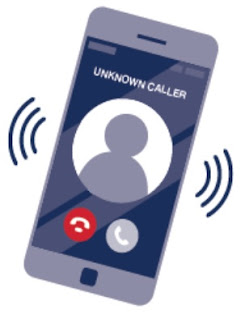
Spammers are everywhere as anyone on social media can attest. But, it's not just social media that attracts these unscrupulous predators. Spammers use phone calls, email and text messages to entice folks to part with their money and/or personal information.

So, after receiving received email information about Slam the Spam, decided to share in a post. Thankfully, we haven't fallen victim to any of these schemes; however, countless others have and unfortunately, in recent years that included a family member.

One thing is certain, you can never be too careful. Although agencies referred to in this post are specific to the U.S., there may be similar agencies in other countries as well.

National Consumer Protection Week (NCPW) is an annual campaign to give people information to help them stay safe, informed, and connected. The Federal Communications Commission (FCC) has an online toolkit with information on how to stop unwanted calls (robocalls) texts and emails.

On Thursday, March 5, the Social Security Administration (SSA) and Office of the Inspector General (OIG) are supporting National Slam the Scam Day by providing more information on recognizing imposters.

Recognizing the basic signs of a scam gives everyone power to ignore spammers and report the activity based on some of the following red flags from scammers who: 
  • Pretend to be from an agency or organization you know to gain trust.
  • Tell you there is a problem or that you’ve won a prize.
  • Pressure you for immediate action.
  • Tell you to pay in a specific way (gift cards, wire transfers or cryptocurrency) — often with the promise of keeping your money safe.
All of these are glaring red flags since authentic government agencies will never:
  • Threaten with arrest or legal action if you don't agree to pay money right away.
  • Suspend a Social Security number.
  • Claim to need personal info or payment to activate a cost-of-living adjustment (COLA) or other benefit increase. These are automatic.
  • Pressure you to take immediate action and to share personal information.
  • Threaten to seize your bank account.
  • Offer to move your money to a “protected” bank account.
  • Demand secrecy.
  • Direct message you on social media.
  • Ask for payment using certainspecific methods
Unfortunately, scammers are using Artificial Intelligence (AI) as an additional tactic to trick people. Actions that everyone can take:
  • Hang up on suspicious calls from “government officials” claiming there is a problem with a Social Security number or account.
  • Never engage if a call feels "off."
  • Don't make any requested as many of the requested methods are untraceable.
What You Can Do
Report Social Security-related scams at oig.ssa.gov and report other government imposter scams to the FTC at reportfraud.ftc.gov.

Spread the word by using #SlamTheScam on social media to raise awareness and repost #SlamtheScam content on social media to help protect family and friends.

In the past year, a fellow blogger posted about falling victim to a scam; other bloggers may recall the post. Not only was the incident unfortunate to read about, but showed that scammers are always willing to take advantage of others. 

While it's not possible to eliminate spams and scams entirely, there are ways to stop them from happening to yourself and others. 

Wednesday, December 1, 2021

'Tis the Season

Not only for holiday cheer, good will and shopping, but definitely for Scammers too. This Scam Alert came from the Social Security Administration in my email this week. I felt it was worth sharing to prevent anyone being bamboozled by these completely worthless individuals (and that's exactly how I really feel, my friends). 

(For those unfamiliar with the SSA, it's an independent agency of the U.S. federal government that administers Social Security, a social insurance program consisting of retirement, disability and survivor benefits.)

Since these (or similar) scams could inadvertently affect unsuspecting folks, information in this post was re-created as closely as possible with text formatting from the original email. (This advice can be applied to calls from other institutions like credit cards or banks. When dubious, never share any personal information, instead check with the institution yourself. )

SCAM ALERT

The Social Security Administration will never threaten, scare, or pressure you to take an immediate action.

 If you receive a call, text, or email that...

  • Threatens to suspend your Social Security number, even if they have part or all of your Social Security number
  • Warns of arrest of legal action
  • Demands or requests immediate payment
  • Requires payment by gift card, prepaid debit card, internet currency, or by mailing cash
  • Pressures you for personal information
  • Requests secrecy
  • Threatens to seize your bank account
  • Promises to increase your Social Security benefit
  • Tries to gain your trust by providing fake "documentation," false "evidence," or the name of a real government official

. . . it is a SCAM!


Do not give scammers money or personal information – Ignore Them!
Protect yourself and others from Social Security-related scams
  • Try to stay calm. Do not provide anyone with money or personal information when you feel pressured, threatened, or scared.
  • Hang up or ignore it. If you receive a suspicious call, text, or email, hang up or do not respond. Government employees will not threaten you, demand immediate payment, or try to gain your trust by sending you pictures or documents.
  • Report Social Security-related scams. If you receive a suspicious call, text, or email that mentions Social Security, ignore it and report it to the SSA Office of the Inspector General (OIG).
  • Do not be embarrassed if you shared personal information or suffered a financial loss.
  • Get up-to-date information. Follow SSA OIG on Twitter @TheSSAOIG and Facebook @SSA Office of the Inspector General for the latest information on Social Security-related scams. Visit the Federal Trade Commission for information on other government scams.
  • Spread the word. Share your knowledge of Social Security-related scams. Post on social media using the hashtag #SlamtheScam to share your experience and warn others. Visit oig.ssa.gov/scam for more information. 
  • Please also share with your friends and family — Report a Scam.
It's also worth mentioning that spammers abound not only this time of year, but all the time. Recently, I've received comments from one using the name, Ratana. These comments are always vague with wording like interesting post . . . There's always a link to another website some for online gambling. This spammer has left similar comments on other blogs. My advice and, what I'm doing, is never acknowledge the comment, never click on a links, delete  it immediately — if anyone has experience on how to permanently block, please share. 

Of course, I don't expect that this spammer or others will actually be reading this post, but to paraphrase from a famous movie: we have a failure to communicate and the deletions will continue as long as necessary. 

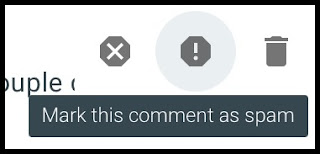
Here's how to mark comments as SPAM in Blogger (something I've neglected to remember). Select Design on the top right of your blog, then Comments (on the right side). Place your cursor to the right of any comment and these options display: Remove content of this comment, Mark this comment as spam, Delete this comment. 

Wednesday, June 27, 2018

Scam Alert (Again)

This post was originally quite long, I reviewed and shortened it.

Scammers never give up trying to defraud. New U.S. Medicare cards are being sent and the game is on once again. Here's what can happen: scammers call and ask for personal information, money or threaten to cancel health benefits if information isn't provided. 
Never give current Medicare card ID to a caller. It has a Social Security Number (SSN). Ignore such calls and/or hang up — It’s a scam. (You can report calls to Medicare 1-800-MEDICARE (1-800-633-4227).)
Medicare.gov graphic
Like the IRS, Medicare will never call and ask for information or money. The new card is FREE and being mailed; no action is neededIt will have a unique Medicare identifier, not a SSN to protect your identity. It uses numbers 0 thru 9 and letters, excluding S, L, O, I, B, and Z which are never used (excluded for ease of reading it seems).
Medicare.gov graphic
Medicare coverage and benefits will remain the same. New cards will start arriving state by state starting April 2018. Estimates are it'll take a year to mail cards nationwide, ending by April 2019. 

Once a new one is received, completely shred or cut up the old card which has a SSN. Don't toss in recycling or garbage. "Dumpster divers" search there for personal information. 

Hope this info is helpful to some folks.

Thursday, April 10, 2014

Feathers and Phishers

image
A previous post ranted about house finches, that were trying to nest not in trees, but on our front porch ceiling fan. Several times daily we’d clear nesting materials off the porch and fan blades. We had put snakes (plastic not real) on the blades, without success. These birds were set on starting a home. We were just as determined that they find other lodgings.
SO, we begged asked for reader suggestions. Possum, Dianne and Michelle suggested that we leave the fan running. A great idea and one we thought of too as we set it on low before leaving for a weekend trip to Washington, DC.
So far it’s worked. We’ve been checking the  porch and fan since returning home. NO feathered homesteaders in sight — porch and blades are clear.
There’s MORE . . . image
IF you remember (and even if not), in  mid-March, Grenville posted about an Elizabethimage Henderson
, who sent an email that she was interested in buying our house, sight unseen. Supposedly, she was abroad and unable to come and view it: “The sale of the property does it require I come for a viewing first before we conclude?  Because I am in UK at the moment.” 
REALLY, too good to be true?
Yeah, we thought so too. Grenville sent an email reply  that our lawyer would follow-up. Ms. Henderson sent another email with a mobile (UK) phone number and asked us to call her. WHY would we do that?  We’re too cheap thrifty to call abroad AND also not un-savy. We weren’t born yesterday (no age-related jokes, please).
Bet you can guess what happened — that’s right — she hasn’t contacted us again.
DRAT. We were ready to pack-up — if an offer seems too good to be true, it’s not.
imageYET, scammers and phishers keep at it. Since Grenville’s Did You Get the Call? post, we’ve had more phony PC-related calls, always starting off with: “Your Windows computer is infected and is sending out emails with viruses . . .you must turn on your PC now so we can help, etc.”
Grenville continues to have fun with these scammers. He will ask them for their Microsoft ID number OR tell the caller that he is a security advisor.
Odd thing is that THEY always hang up on him. OK, it’s usually after he mentions the armed security team that he will dispatch to their location.
Guess they really don’t care about our computer. We never thought they did. Also we use Apple products. And as posted before, Microsoft Security doesn’t call directly.

Saturday, March 15, 2014

How was your Thursday??????

WELLLLL!!!! Mine started with one of those emails that catch ya by the short hairs, open your eyes super wide,  give ya a good shaking, and all before the first sip of coffee. Now for me that is a really bad thing to start the day with. Worse than forgetting to turn the coffee maker on to automatically start brewing at 5:45Am. Even worse than stepping out of bed and forgetting that the rugs are out for cleaning  right after you feet hit the ice cold floor. The email started:

Action required: Please confirm activity.
FRAUD PROTECTION
SERVICES

No this was not a scam. This was an alert that someone had tried to buy some tickets online using my credit card. Tickets that went for $1100.00 plus. And in all places, CVILLE, where ever the heck that is. Well, since this card is only used for internet purchases, i have a low limit on it. If i intend to buy something expensive, i call the card company and get a one time limit raise. They like when you do that.

ANYHOW, without coffee i went to the phone and called the number for the fraud department. While i was waiting on the phone, i went on line to the credit card site and pulled up the recent activity. There i found that just before the attempted ticket purchase someone in a Marriott Courtyard had charged $8.25 to my account,  and then credited it back to my account.
After clearing up the bogus ticket purchase with the fraud person i mentioned the other charge. AH HA!!!! we both agreed that all the charges came from the same Marriott. They probably had tried out  random numbers until they found one that worked, then went for the big one. Knowing the location and time seemed to make her happy. I think i made her day. I hope i've ruined theirs. End of this story is my card was canceled and a new one was issued. Now i have to change the card number on certain accounts.

BUT WAIT FOLKS,,,,,,, THAT'S NOT ALL!!!!!!!!!!
Just before we turned out the lights Thursday we got the following email 
 My name is  Elizabeth Henderson, i am interested on your property @oldhouses.com, if still available for sale. 
1)Please are you the real owner of the property? 

2) The sale of the property does it require i come for a viewing first before we conclude?  Because i am in UK at the moment. 

3) Do you have the documents(Legally and up to date)?

 Any equity on the property? Please for a better understanding i need this answers.

Thanks

Elizabeth
Most of you know we have been trying to sell our house for a while. AND we did list it on old houses.com. Sooooooo we got a little excited. Of course excited with a healthy dose of suspicion.

The first thing that set off red flags was the grammar. BUT she might have been using a cell phone and didn't want to waste keystrokes on commas and such. Next was the sentence structure. A little odd but she sounded like she was English and we know American is almost a foreign language over there;-]]]. Lastly, who buys a house in a foreign country sight unseen????? SOOOO we decided to answer her questions, but give only information that was on our blog site and nothing specific.
Dear Ms Henderson,
Yes, we are the real owners of this property. There are no mortgages or liens on the property. All taxes are current. There is no need for you to come to the property if you do not wish to. Our attorney can handle the paperwork for the sale via the mails.
The deed and title insurance are clear and up to date.
If you are still interested please send your full legal name, mailing address, and contact phone number so our attorney can draw up a contract of sale agreement.
Since you are out of the US, we would also consider selling most of the furnishings as a separate sale. If you are interested we will furnish you with a full list of available furnishings.
Thank you for your interest in our home.
 This morning we got this answer:
Thanks  for your mail Patrick, Here is my contact number call me so that we can talk ok and agree on the price.
Thanks
+44-74-0531xxxx 
Elizabeth 
 By now we had some serious doubts about this and they grew during the day. By afternoon coffee we had decided ( after much scam research and attempting to trace her email address and phone, which is a mobile in the UK) that we would definitely not be calling and get a huge phone charge, and that we would not answer this email.  Our friend Thomas, in Oregon, has sent us a wonderful response to this scam if she continues, and we may use it. BUT i will add that we require a 10% good faith down payment in the form of a certified bank check to continue the negotiations. I expect that to end everything. Something about scamming the scammers.

Your suggestions for responses are welcome....;-))))))
Grenville

Wednesday, January 29, 2014

Charity Junk Mail

If you receive a check from the National Cancer Research Center as I did this week, do some research before you send a donation. You might change your mind. 
My $2.50 check arrived inside a fundraising appeal letter. My first thought was to toss it in recycling. (Always trust your first instincts, I learned. I'll tell you why.)

Sometimes, unsolicited checks can be used as vehicles for scams. Your endorsement can commit you to further obligations in fine print. That was not the case; the accompanying letter stated:

"The $2.50 check is real.  You could put this letter aside, cash the check, and forget all about our important laboratory research and national cancer education programs.  But what I really hope you will do is return the $2.50 check along with your own gift of $10.00 or more to help in our fight against cancer."

Several friends and family members have been or are undergoing cancer treatments, so my second thought was to send a minimum donation with the request NOT to solicit further. Of course, that hardly ever never seems to work. What was I thinking?

Deciding to trust my first instinct (tossing it), I checked on the National Cancer Research Center online and learned from blog postings that others had received similar checks as far back as 2-3 years ago with the same M.O. One blogger suggested going to the Charity Navigator site and I've bookmarked it for reference.

The National Cancer Research Institute is a project of the Walker Cancer Research Institute (WCRI) headed by Helen Marie Walker, president. Evan Harris Walker, an American physicist, who died in 2006, founded WCRI in 1981.

Charity Navigator gave it 1 star (out of a possible 4) for accountability and transparency, and 0 for financial. Most of the funds raised (over 90%) are used for more fundraising.  So with a $10 donation, most goes to send mailings to more people (and so on and so on). See the pattern here.

Comments left at Charity Navigator indicate that some folks cash the check donating the money to "real" charities. Of course, you could cash the check and keep the money, but your name and address are on the check with a series of bar codes. Cashing it could lead to even more problems, and would you really need the $2.50 that much?

WHY more problems?
The WCRI could then sell your info to other "charities"  and you could be inundated with even more junk mail. People often complain of being inundated by requests for money that they can't  seem to stop.

EASY Fix
If you get one of these letters, it's your choice. Mine went into the shredder after I salvaged the included postage: four 1-cent stamps. Postage this week went to 49 cents for a U.S. postage stamp.

(Credits: The graphic herein is from the Devon Authorities Recycling Partnership, U.K.)

Tuesday, January 14, 2014

PC Support Scammers

Ever receive a call that goes something like this?

This is Microsoft Technical Support calling. Your Windows computer has been found to be infected with viruses that could jeopardize your personal information (or something similar). We can help you.
It happened to me (again) last week when I received a call from a woman with a heavy (Indian?) accent who claimed to be from Microsoft Technical Support. Coincidentally, there was a lot of background noise, similar to what might be overheard in a busy call center. I was told that my Windows computer was sending ominous messages indicating it had a virus. After Grenville got on the phone and asked for a manager, a similarly accented male speaker give us the same bogus message.

The intended goal was to give remote access to "troubleshoot and remove the offending virus(es)." Here's the irony, my HP Windows computer was NOT turned on AND I had run a full scan the night before, after we returned home from PA. It had also been turned off during that time and the power supply shut down as we always do when leaving to travel.

What did we do?
Hung up, then turned on the computer and ran another full scan with no negative results.

In doing an online search, I learned that Microsoft has warnings about this type of scam. Also, Microsoft is in the business of making money from tech support and does not give away free customer support. Microsoft will never call a user unsolicited.


According to the Microsoft security site, once scammers have access to a PC, they can install malicious software, steal personal information, take remote control of a PC or direct consumers to fraudulent websites where they are asked to enter their credit card information. Microsoft Safety & Security Center has published guidelines here.

The U.S. Federal Trade Commission (FTC) is also aware of these fraudulent calls. You can read about Tech Support Scams - how they work and what actions you can take.


As frightening as a call like this can be to the uninformed PC user, best action is do nothing AND hang upYou won't risk having your computer's privacy invaded.

This tech support scam has exploded nationwide and people are falling prey to it every day, based on fear and lack of advance knowledge.

If you get a call claiming it's from Microsoft, HANG UP, and DO NOT turn on your PC and never allow remote access under any circumstances.


While tech-savvy folks, like many of you, are unlikely to fall for this scam, you may have relatives and friends who lack the necessary dose of skepticism and PC wisdom. Spread the word and help keep these scammers from harming others.

Saturday, December 14, 2013

Coal for Spammers & Phishers

imageTis the season for lots of activities, including an increasing amount of spam and phishing emails being sent. Yesterday, we received emails at our blog email and my email (both at Gmail) purportedly from a fellow blogger. We recognized this as a fake and deleted them and the email address it was sent from which was connected to the blog (after resuscitating from the trash). I decided to re-post it as a warning. It really made me very angry (does it show?).

It’s a shame that some unscrupulous folks have nothing better to do — isn’t Wal-Mart open 24 hours?

This is a FAKE phishing email (copied as received). IF you ever get anything similar, you should also DELETE it. I’ve omitted the blogger’s name AND blog name as I didn’t think it appropriate to include. The message is as received:

Subject: What a Terrible Experience!!!!!!!!!!!!!!!!!! (blogger’s name)

I Hope you get this on time, I made a trip to Ukraine and had my bag stolen from me with my passport and personal effects therein. The embassy has just issued me a temporary passport but I have to pay for a ticket and settle my hotel bills with the Manager.


I have made contact with my bank but it would take me 3-5 working days to access funds in my account, the bad news is my flight will be leaving very soon but I am having problems settling the hotel bills and the hotel manager won't let me leave until I settle the bills, I need your help/LOAN financially and I promise to make the refund once I get back home, you are my last resort and hope, All i need now is $2,650 USD Please let me know if I can count on you and I need you to keep checking your email because it's the only way I can reach you.

Regards,

This blogger was on our sidebar list of blogs (but has since been deleted). After the phishing attempt, I left a message on the blog to alert the blogger that her email (at Gmail) had been hacked and quite possibly other bloggers had received this sham email. Last night, I clicked on the blog to check for a response. This is what displayed (again the blog name has been omitted):

Blog has been removed

Sorry, the blog at xxxxx.blogspot.com has been removed. This address is not available for new blogs.

It’s a shame that the blogger had to end it, but most likely did it as a precautionary measure. Hopefully, another one will be created with a different email.

This is NOT the first time we’ve received phishing emails like this (certainly not the last). There was one supposedly from our credit card company last week. We contacted them and then forwarded the email to their fraud department. We suspect that keeping contacts listings online allows a higher risk of having them hacked. I previously had an online Yahoo contacts list online and it was hacked. I deleted it after sending everyone a message NOT to open/reply to any emails sent from it.

We DO NOT keep contacts online at Gmail, Yahoo, or Verizon and retain them on our devices.

Do you have a similar experience OR suggestions on preventative actions ?
Have you received similar scam/phishing emails ?

Rant over. Enjoy the weekend and for those who have snow in the forecast, be safe.