Showing posts with label MD. Show all posts

Tuesday, August 5, 2014

A Day at the Races

We had a weekend day at the races* at the Great Pocomoke Fair in Pocomoke, MD, a 45-minute drive from home. We didn't lose $ bettin' on the ponies as this is the only fair in Maryland that features a single day of harness racing — with no betting. Harness racing is always on the last day of this annual event.


Although fair attendees don't bet here, there are cash purses for these exhibition and USTA (United States Trotting Association) sanctioned races. Race participants come from neighboring eastern states, including our home state of NJ. The prize monies are awarded with support from Ocean Downs (MD) Racetrack which provides financial support to the Great Pocomoke Fair to further promote harness racing in Maryland.


Horse racing was always a highlight of the Great Pocomoke Fair from its earliest days. Trotters came from many nearby states even then. Races were run several days in a row, with as many as a dozen horses in a race, unlike this single afternoon event. 


Watching these spirited horses and skilled riders made for a fun outing. Threatened thunderstorms held off so that all 12 races were completed.


* A Day at the Races was the 7th film starring slapstick comedians, Chico, Harpo, and Groucho Marx. Like their previous MGM feature A Night at the Opera, this 1937 film was a major hit for the trio. 

In the film, a veterinarian posing as a doctor, a race-horse owner, and friends struggle to help keep a sanitarium open with the help of a misfit race-horse. 

It was the only Marx Brothers film to receive a competitive Oscar nomination. 

It can be see (FREE) online at YouTube here. It's in B&W and running time is just over 1-1/2 hours.

Monday, June 2, 2014

Pocomoke River SP

This past weekend, our Sunday bike ride destination was Pocomoke River State Park located on Maryland's lower eastern shore. The park is well known for cypress swamps that border the Pocomoke River, which originates in the Great Cypress Swamp in Delaware and flows southwesterly 45 miles to the Chesapeake Bay. 


This state park is within Pocomoke State Forest on the banks of the Pocomoke River between Snow Hill and Pocomoke City in Worcester County, MD. The park is divided into two areas, Shad Landing (544 acres) on the south bank of the river off Rte 113, and Milburn Landing (370 acres) on the north bank on Rte 364. The Shad Landing area was historically important in a chain of refuges for runaway slaves seeking freedom in the north.

We cycled on the Shad Landing portion and while there were a number of others folks there, most campsites were empty as the busy summer season hasn't started. The park offers hiking, biking, camping, kayak and canoe rentals, boat launch, picnic areas and shelters, playgrounds, swimming pool, camp store, and a nature center. 


The park's location between northern and southern regions provides a variety of plants, such as dogwood and pink laurel, bald cypress, yellow pond lily, and loblolly pine. 


Wildlife includes otters, prothonotary warblers, pileated woodpeckers, bald eagles, northern water snakes, and red skinks; fish include large mouth bass and pickerel. 
The laurel was in bloom along our ride. However, the most wildlife we saw were squirrels, birds and a red-headed skink seen near a restroom.
The past two weekends have provided perfect weekend bike riding weather, so we're enjoying them before it gets TOO hot.

We hope y'all had a great weekend too.

Monday, August 5, 2013

Got Our Goat?

No, it just seemed like that on Saturday when we visited the Great Pocomoke Fair in MD. It was late in the day when we stopped into the livestock barn.

There were goats of all colors and ages, including this 1-week old baby introduced by this young lady as "Cleo."

It was late in the day and the pigs were exhausted.

So we checked out the cows, before "moo-ving" on.

Yes, I know it was a very bad awful pun — Welcome to Monday !

Sunday, August 4, 2013

Horsin’ Around

That’s what we were doing yesterday afternoon when we took a road trip to watch live Harness Racing. And, we traveled less than an hour, plus we didn’t lose any money “bettin on the ponies.”harness racing3We were on the eastern shore in the neighboring state of Maryland, attending the final afternoon of The Great Pocomoke Fair.racing collage1The Great Pocomoke Fair is the only one fair in Maryland that features a single day of harness racing.SAMSUNG CAMERA PICTURES
Horse racing was always a highlight of the Fair from its earliest days. Trotters came from many neighboring eastern states. Races were run four days in a row, with as many as a dozen horses in a race. harness racing4Currently there are 4 to 6 horses per race in an afternoon of 12 races.harness racing6Unlike years ago, there’s no betting at these races which are exhibition and USTA (United States Trotting Association) sanctioned races. Horses are brought in from neighboring states, including our native NJ. Purses are awarded with support from Ocean Downs (MD)Racetrack which pledged financial support of the Great Pocomoke Fair to further promote harness racing in Maryland.racing off
It was a fun afternoon. Luckily the threatened thunderstorms held off, but hastened the running of the final few races as seen above.

Any fun things happen on your weekend ?

Saturday, September 22, 2012

Vintage Streetcar Ads

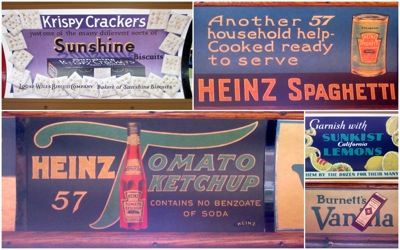
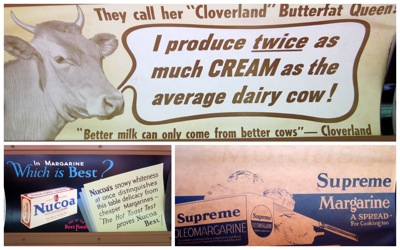
Awhile back, Grenville posted about our anniversary road trip visit to the Baltimore Streetcar Museum. While he focused his attention (and camera) on the trolley cars, I was interested in the vintage ads displayed along both top sides in the streetcars. I'm not sure of the years, but believe that some of these ads date from the early 1900s through the World War II mid 1940s era. Along with taking photos of the ads, I looked up information online.
Here are some prominent ads from World War II for women's recruitment and products. The Granger tobacco ad says in small print that the man shown is a naval aviator.  Burma-Shave was an American brushless shaving cream, well known for its humorous rhyming poems on small, sequential, highway billboard signs.  The first ones appeared in Minneapolis, Minnesota in 1925 and remained a major marketing tool until 1963. Its estimated there were over 600 such signs.
Trolley WWII ads
Founded by Vincent Bendix in South Bend, Indiana, the Bendix Corporation was an American manufacturing and engineering company, which at various times in its 60-year history from 1924-1983, made auto brake shoes and systems, aircraft brakes, aeronautical hydraulics and electric power systems, radios and TVs. But,while it was well known for the Bendix name on home clothes washing machines, the company NEVER actually made these common home appliances. In 1936, the company licensed its name to Bendix Home Appliances (also in South Bend) for a 25 percent stake in the company and Bendix Home Appliances, founded by Judson Sayre was started and later sold to Avco Manufacturing.
Lux started as Sunlight Flakes laundry soap in 1899. Lux was a successful brand by the early 1920s, when in 1924, Lever Brothers conducted a contest that led them to an interesting discovery: woman were using Lux as toilet soap. In 1925, Lux toilet soap was launched in the U.S. Since then, it has been marketed in various forms including hand wash, shower gel, and cream bath soap.The B.T. Babbitt's 1776 soap powder dates from the 1920s to advertise Benjamin T. Babbitt's detergent which had factories in Chicago, Illinois and NJ. Babbitt's soap was one of the first nationally advertised products and was sold from brightly colored street cars. He was one of the first manufacturers to offer tours of his factories and one of the first to also give away free samples. Writer Sinclair Lewis used the Babbitt name for the title character of his 1922 best selling novel of the same name.
Trolley ads laundry
Many ads were directed to the use of home remedies. BC headache remedy is still available after its 1907 start at the Five Points Drug Company in Durham, NC. The product name comes  from the initials of its creators, Germain Bernard and C.T. Council. The company was later sold to GlaxoSmithKline Pharmaceuticals and then to Prestige Brands. Sloan's liniment was the product of Earl Sloan and in the 1870s, it started as a horse liniment, then someone discovered it also relieved back pain. Soon afterwards, early advertising stated "good for man and beast." The liniment was popularly marketed in the early 1900s. Iodent toothpaste was manufactured by the Iodent Chemical Company in Detroit, MI in the mid 1940s. Today, Iodent fluoride toothpaste is still marketed towards smokers.
Trolley ads remedies
Most of these products are still available for use today. The lone exception is Burnett's Vanilla, which was produced by the Joseph Burnett Company of Boston, MA. The company started in 1847 when chemist/druggist Burnett developed a vanilla extract for flavoring foods. The Burnett name continued in use until the 1960s, after that time it was no longer used.
Trolley ads food
Cloverland is a Baltimore dairy started by the Kemp family in 1919 and is still in operation today. Nucoa is made by Best Foods and appears to be available today in some areas according to online searches. The Supreme Margarine ad dates from the 1920s; the company is no longer in business. 
Trolley ads dairy
This circa 1910 trolley ad was for Fyr-Pruf Stove and Nickel Polish made by the American Ammone Co. In the 1900s, most stoves were made of cast iron, so women may have needed to polish them, but I can't imagine men polishing their furnaces. Can you?
fyr-pruf ad 
Arrow still makes shirts, however, the price of men's dress shirts has increased considerably from the $1.50 (and up) price listed here.The company has been around for over 150 years. Part of the Arrow collar popularity was the creation by artist J.C. Leyendecker of the Arrow Collar Man. The stylish man in these ads always dressed in the latest Arrow items and made it one of the most recognizable brand names.
arrow shirt
SORRY, but photos are NOT clickable to enlarge because this post was composed on a MacBook using the MarsEdit blog program which does not provide the same features as Microsoft Live Writer does for PC blogging. There is NO similar SW for Mac users (sadly) . . . yet.

Wednesday, September 1, 2010

Day at the Races & More

We went to the races last Saturday – 16 in all – and never even caught a glimpse Groucho, Harpo or Chico Marx, stars of the 1927 film of the same name.

Our day tripping adventure took us to the Great Pocomoke Fair in Wooster County, MD where we watched harness racing – this was a first for Grenville and myself. We learned some new things and didn’t lose anything (but time) as there was no betting involved.

Harness racing is a form of horse racing in which horses run at a specified gait and usually pull the driver in a two-wheeled cart - sulky. Most harness races start from behind a motorized vehicle which has a hinged gate and takes them to the starting line. At the starting line, the wings of the gate are folded up (but not in this case) and the vehicle speeds up away from the horses.
DSCN1766
DSCN1901
DSCN1890The sulky, also called a bike, is a wheeled cart with large bicycle type wheels. The driver (not a jockey as in thoroughbred races) carries a long light whip which is used to signal the horse by tapping and to make noise by striking the sulky shaft. There are strict rules as to the use of the whip. Almost all North American races are run a distance of 1 mile.
DSCN1642

The Great Pocomoke Fair started in 1901 and was called "Great" at least up through 1909, had all the elements of rural county fairs – fruits of the harvest, handiwork and crafts and farm animal displays. Plus, the added feature of horse racing. imageIn 1907, admission was 25 cents for adults; children under 12 paid 15 cents. You needed a quarter to park a carriage and horse. By 1930, admission rose to 50 cents for adults and 25 cents for children under 12. Admission was $2 for adults last weekend or 25 cents (as in 1907) with a discounted coupon (which we had).
Entertainment included games of chance, boxing and wrestlingimage matches and sideshows with snake charmers and fortune tellers. Horse racing was a fair highlight even then. Trotters owned by folks from as far away as Washington, DC came to race. Races were run for four consecutive days with as many as 12 horses in each race. Last weekend, the largest field of entries we saw had 5 horses; most had only 3 or 4 entries.
At the turn of the century, six hotels hosted visitors – the Ford House, Parker House, Hotel Pocomoke, Worcester House, Riverside and Landing House – all gone today. The Fair grounds were about a two minute walk from the train depot and a quarter of a mile from the wharf of the B.C. & A. Railway Company, where four boats a week from Baltimore docked. The fair was a tradition until 1930, when it was discontinued as a result of the Great Depression; it resumed in 1991.
DSCN1618

DSCN1620Another first for us was watching the greased pig contest. No piglets were injured and the kids were OK too. DSCN1771 DSCN1776
DSCN1815 DSCN1779
DSCN1787
Which way did they go?
DSCN1825
DSCN1807
And what would a fair be without tractors . . . antique models in red, orange and green and yellow (of course).
DSCN1930
DSCN1934 DSCN1937
DSCN1935
DSCN1953
DSCN1950 DSCN1934 TDSCN1981These tractors were entered in the antique tractor pull that Grenville posted about earlier. They may be old, but they’re still going strong.